|
|


|
Inhibition of nuclear transport of
pathogenic kariophilic proteins: We are screening for peptide inhibitors, which will block specifically the nuclear import of human HIV-1 and the plant Gemini virus kariophilic proteins using two main concepts. a. In collaboration with Prof. Chaim Gilon we are synthesizing backbone cyclic peptides, which mimic the NLS sequence and are able to block the viral protein nuclear trans location.
Cyclic HIV-1 Rev peptide mimicking the Rev Argenin Rich Motif (ARM). From:Hariton-Gazal, et al Biochemistry 2005, 44, 11555-11566.
b. Using different in-vivo and in-vitro screening methods we are searching for short peptides which will bind specifically to viral NLS sequences and thus block viral protein and nucleic acid nuclear import.
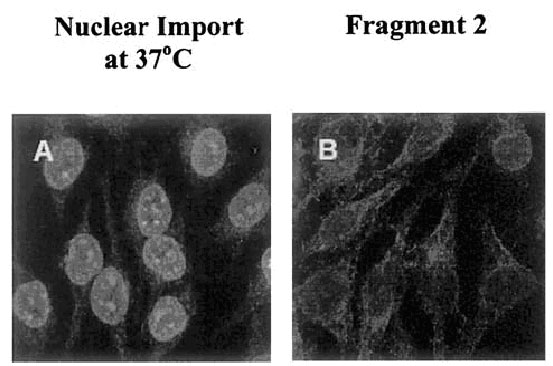
Inhibition of nuclear up-take of the HIV VprN peptide with a
fragment obtained using a phage display
library From: Krichevsky, A. et al. Virology 2003, 305, 77–92.
The same approach is used in
collaboration with Prof. Vitaly Citovsky to develop peptides that will
specifically bind to the NLSs of the Agrobacterium VirE2 and to that of the
TYLCV coat protein. This is in order to develop peptides that wiil inhibit
infection of plants by Agrobacteriun and by TYLCV (The tomato yellow curl leaf
virus).
Copyright ©,2006 , The Hebrew University of Jerusalem. All Rights Reserved
You are here: Home-Research-Nuclear inhibition Previous Topic: Protein import Next Topic: Cell penetration
|